
When FAIL Is Not Final
You ran the numbers. Your power station outputs 2,400W peak. Your portable AC surges to 4,071W. The calculator returns FAIL, and for good reason: 4,071W exceeds 2,400W by 70%.
But this particular FAIL has a solution. The portable AC is a compressor load, and compressor loads surge because the motor draws massive inrush current during the first fraction of a second at startup. A soft-starter changes that fraction of a second. Instead of slamming full voltage into a stationary motor, it ramps voltage gradually over 1 to 3 seconds, limiting inrush current to roughly 45% of its unrestricted peak.
Our compatibility engine models this with a 0.45 reduction factor: the soft-started surge equals the original surge multiplied by 0.45. That is more conservative than manufacturer claims of 65 to 75% reduction, and deliberately so. This factor is part of our True Surge Protocol, and we explain the reasoning in Section 4.
How Soft-Starters Work
To understand what a soft-starter does, start with what happens without one.
Standard hard start. A contactor or relay closes, connecting the compressor motor to full line voltage instantaneously. At the moment of contact, the motor rotor is stationary. A stationary rotor generates no back-EMF to oppose the applied voltage, which means the motor windings present near-zero impedance. The result is a current spike of 3 to 6 times the running current, lasting 100 to 500 milliseconds. For a detailed explanation of this physics, see our surge watts guide.
Soft start. An SCR (silicon-controlled rectifier) or thyristor circuit sits between the power source and the motor. Instead of applying full voltage at once, it fires the SCRs at a gradually increasing phase angle, ramping voltage from near-zero to full over 1 to 3 seconds. The motor accelerates progressively, inrush current stays bounded, and the peak demand on the power station’s inverter drops dramatically.
Soft-started surge
Reduced surge = Original surge × 0.45
Three types of startup assistance exist, and only one reduces surge for power station use:
External soft-starter (MicroAir EasyStart, Hyper Engineering Soft Start). $35 to $80. Installs on the compressor’s electrical connections. Actively limits inrush current by ramping voltage. This is the device you want.
Hard-start kit (5-2-1 Compressor Saver, Supco SPP6). $15 to $30. Adds a start capacitor and relay to boost starting torque. This helps a compressor that struggles to start under pressure, but it does not limit inrush current. In fact, the additional capacitor can briefly increase peak amps during the first cycle. A hard-start kit helps the motor start. It does not reduce the demand on your power station’s inverter.
Inverter-driven compressor (built-in VFD). Factory-equipped in modern inverter ACs, mini-splits, and linear compressor refrigerators. The variable-frequency drive ramps the motor internally from low speed to operating speed, producing surge ratios of just 1.0 to 1.5x. These devices already have low surge in our database and do not need an external soft-starter.
Which Devices Are Eligible
Of the 49 devices in our database, 11 are eligible for soft-start: 8 compressor loads and 3 motor loads. The remaining 38 have no motor inrush to reduce.
| Device | Running W | Surge W | Reduced (× 0.45) | Load Profile |
|---|---|---|---|---|
| Central AC (3-Ton) | 4,060 | 21,356 | 9,610 | compressor |
| Pancake Air Compressor | 1,620 | 8,343 | 3,754 | compressor |
| Well Pump (1 HP) | 2,392 | 7,176 | 3,229 | motor |
| Portable AC (12,000 BTU) | 1,357 | 4,071 | 1,832 | compressor |
| Sump Pump (1/2 HP) | 1,127 | 3,381 | 1,521 | motor |
| Dehumidifier (70 Pint) | 860 | 3,335 | 1,501 | compressor |
| Gas Furnace Fan | 1,058 | 2,430 | 1,094 | motor |
| Window AC (8,000 BTU) | 710 | 2,010 | 905 | compressor |
| French Door Refrigerator | 207 | 414 | 186 | compressor |
| Full-Size Freezer | 160 | 320 | 144 | compressor |
| Portable Electric Cooler | 60 | 120 | 54 | compressor |
Eligible does not mean guaranteed to pass. The central AC at 9,610W soft-started still exceeds every portable power station in our database. The well pump at 3,229W requires a station with at least 3,400W peak. Soft-start is most effective on mid-range compressors (portable AC, window AC, refrigerator, dehumidifier) paired with mid-range stations (1,800W to 4,800W peak).
The other 38 devices are not eligible for soft-start, and no external device will change their verdict:
Resistive loads (space heater, electric kettle, toaster, hair dryer): No motor. Surge ratio is 1.0x. There is no inrush spike to reduce.
Electronic loads (laptop, TV, gaming console, router, phone charger): Switching power supplies with no motor. Surge ratios of 1.0 to 1.3x, driven by capacitor charging, not motor inrush.
Heating element loads (water heater, clothes dryer element, electric stove): Pure resistance. Surge equals running watts.
Medical loads (CPAP, nebulizer, oxygen concentrator): Electronic or small motor hybrid. Surge is low and managed internally. External soft-start is not applicable.
Inverter-driven compressors (modern inverter ACs, mini-split systems): Already have a built-in variable-frequency drive that ramps the motor. Adding an external soft-starter would create conflicting voltage control signals. Never install an external soft-starter on an inverter-driven compressor.
Before and After: Real Verdict Changes
These pairings use real data from our database. Each shows the raw verdict, the soft-started verdict, and whether the 25% compressor buffer still passes.
Pairing 1: Anker SOLIX C1000 (1,800W / 2,400W peak) vs Portable AC (1,357W / 4,071W surge)
Without soft-starter: 4,071W exceeds 2,400W peak. FAIL.
With soft-starter: 4,071 × 0.45 = 1,832W. Under 2,400W peak. PASSES.
With 25% buffer: 1,832 × 1.25 = 2,290W. Still under 2,400W. SAFE. A $50 soft-starter turns a hard FAIL into a fully buffered SAFE on a $700 station.
Pairing 2: Bluetti AC200MAX (2,200W / 4,800W peak) vs Pancake Air Compressor (1,620W / 8,343W surge)
Without soft-starter: 8,343W exceeds 4,800W peak. FAIL.
With soft-starter: 8,343 × 0.45 = 3,754W. Under 4,800W peak. PASSES.
With 25% buffer: 3,754 × 1.25 = 4,693W. Under 4,800W but close. TIGHT. This pairing works but has minimal headroom. Starting the compressor against full tank pressure could push it to the edge. See our air compressor compatibility page for full analysis.
Pairing 3: VTOMAN Jump 1500X (1,500W / 3,000W peak) vs Sump Pump (1,127W / 3,381W surge)
Without soft-starter: 3,381W exceeds 3,000W peak. FAIL.
With soft-starter: 3,381 × 0.45 = 1,521W. Under 3,000W. PASSES.
With 15% motor buffer: 1,521 × 1.15 = 1,749W. Well under 3,000W. SAFE. For more on sump pump sizing, see our sump pump battery backup guide.
Control pairing: EcoFlow DELTA 2 Max (2,400W / 4,800W peak) vs Window AC (710W / 2,010W surge)
Without soft-starter: 2,010W is well under 4,800W peak. Already SAFE. A soft-starter is unnecessary here. The station handles the raw surge with more than double the required headroom. Do not spend $50 on a solution to a problem that does not exist. For a full breakdown, see our window AC guide.
Buying and Installing
For window and portable ACs: MicroAir EasyStart 364. Approximately $40 to $60. Designed for single-phase compressors up to 36,000 BTU. This is the most commonly recommended unit for portable power station users.
For refrigerators and freezers: MicroAir EasyStart 368. Approximately $35 to $50. Designed for smaller compressors found in residential refrigerators and chest freezers.
For larger compressors (well pumps, central AC): Match the soft-starter to the compressor’s horsepower and LRA (Locked Rotor Amps). The Hyper Engineering Voyager Smart Soft-Start covers central AC compressors up to 5 tons. Pricing is $250 to $400 for these larger units.
Installation requires connecting the soft-starter in parallel with the compressor’s start winding, inside the device’s electrical compartment — not inline between the power station and the device’s power cord. On a window AC, this means opening the unit’s electrical compartment, identifying the compressor leads (common, start, run), and wiring the soft-starter across the start and common terminals. The process takes 10 to 15 minutes for someone comfortable with basic electrical work and is documented in MicroAir’s installation guides. An HVAC technician can do it in under 10 minutes.
Safety first: Always disconnect the device from power and wait at least 5 minutes for capacitor discharge before opening any electrical compartment. You are working with mains-voltage wiring. If you are not comfortable identifying compressor leads, hire a licensed HVAC technician or electrician. Check your device manufacturer’s warranty terms before proceeding — most treat external soft-starters like surge protectors, but warranty language varies.
The soft-starter does not change running watts. It only affects the first 1 to 3 seconds of each compressor cycle. Once the motor reaches operating speed, the soft-starter’s SCRs are fully on and the compressor runs at its normal draw. There is no performance impact, no efficiency loss, and no change in cooling output.
These are solid-state devices with no moving parts. Typical lifespan exceeds the compressor itself. Installation does not void most manufacturer warranties because the soft-starter is an external accessory that does not modify the compressor.
Power Stations That Benefit the Most
Soft-starters provide the biggest advantage on mid-range stations where the peak rating falls just short of raw compressor surge. Stations with very high surge ratings already handle most loads without help. Stations with very low peak ratings may still FAIL even after the 55% reduction.
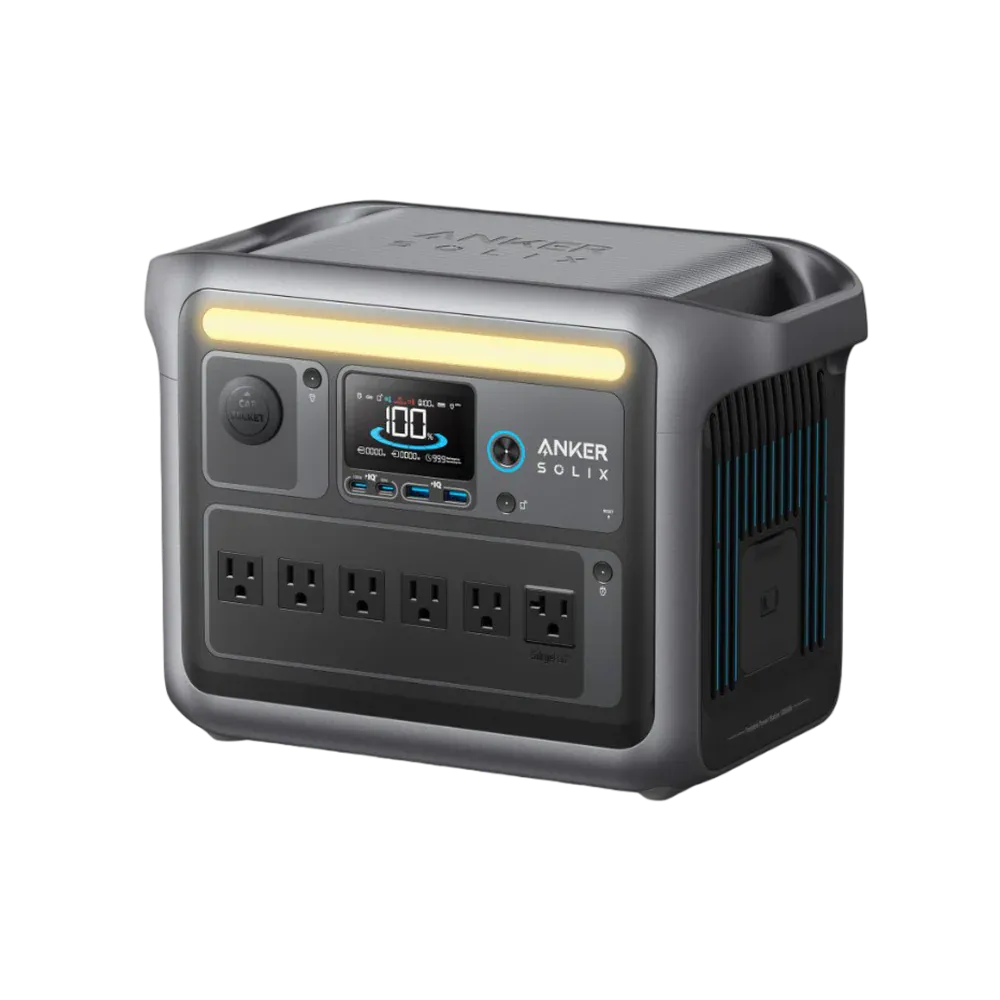
1,800W continuous, 2,400W peak, 1,056 Wh. Without a soft-starter, the C1000 fails on the portable AC (4,071W), sump pump (3,381W), dehumidifier (3,335W), furnace blower (2,430W), and pancake air compressor (8,343W). With a soft-starter, the portable AC (1,832W), sump pump (1,521W), dehumidifier (1,501W), and furnace blower (1,094W) all pass under the 2,400W peak. The pancake air compressor at 3,754W still exceeds 2,400W and remains a FAIL. A single $50 soft-starter turns 4 FAILs into passes on this station.
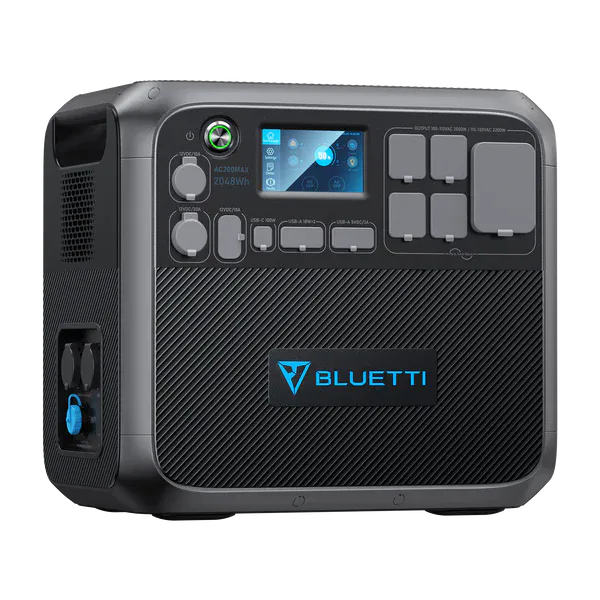
2,200W continuous, 4,800W peak, 2,048 Wh. The AC200MAX has unusually high surge headroom relative to its continuous rating. With a soft-starter, 10 of the 11 eligible devices pass, including the pancake air compressor at 3,754W (buffered to 4,693W vs 4,800W peak). The only exception is the central AC: 21,356W × 0.45 = 9,610W, which still far exceeds 4,800W. Without a soft-starter, the portable AC, sump pump, dehumidifier, furnace blower, and air compressor all fail on raw surge. The AC200MAX plus a soft-starter covers the widest range of compressor and motor loads of any station under $2,500.
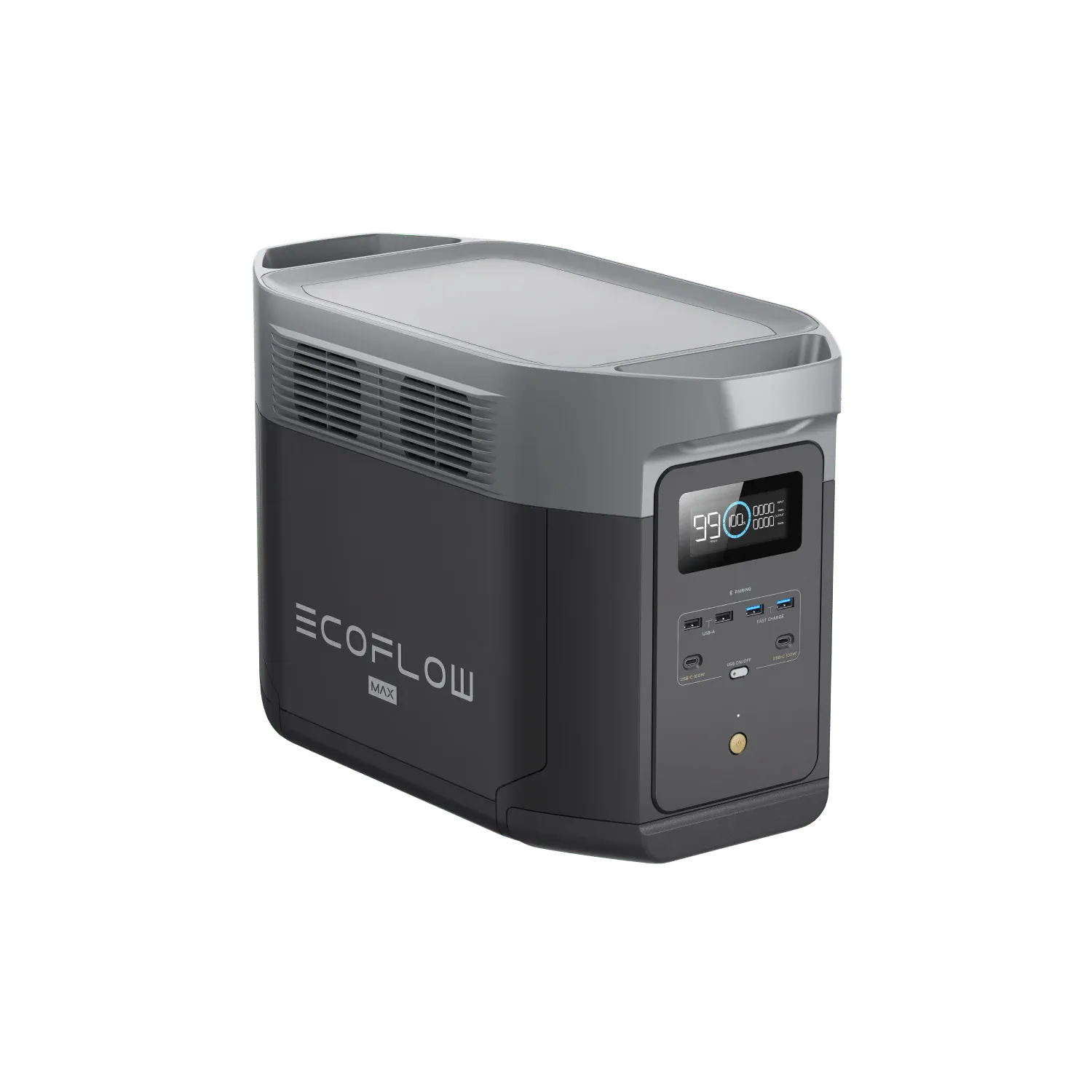
2,400W continuous, 4,800W peak, 2,048 Wh. The DELTA 2 Max already handles many high-surge devices without a soft-starter: the window AC (2,010W), dehumidifier (3,335W), sump pump (3,381W), and furnace blower (2,430W) all pass under 4,800W peak. The soft-starter becomes useful primarily for the portable AC (4,071W raw surge passes 4,800W peak, but with 25% buffer: 4,071 × 1.25 = 5,089W — TIGHT verdict; with soft-start, reduced to 1,832W with full margin) and the pancake air compressor (8,343W fails raw; 3,754W passes with soft-start). Above roughly 4,800W peak, the value of a soft-starter narrows. This station shows the crossover point: strong enough to handle most loads raw, with soft-start as insurance for edge cases.
When a Soft-Starter Is Not the Answer
A soft-starter solves one specific problem: motor inrush current at startup. It does nothing for these five situations.
Running watts exceed the station’s continuous rating. A soft-starter only reduces the surge spike. If the device draws 3,000W running and the station is rated for 2,000W continuous, the station will overload within seconds of the surge ending. The soft-starter bought you 1 to 3 seconds of reduced surge, then the device runs at full draw and trips the inverter anyway.
Voltage mismatch. A soft-starter cannot convert 120V to 240V. If the device requires 240V and the station outputs 120V, the result is VOLTAGE_FAIL regardless of surge. See our 120V vs 240V guide.
The device is not a motor or compressor load. Resistive, electronic, and heating element loads have no motor inrush. A soft-starter wired to a device without a compressor motor does nothing.
Zero surge headroom on the station. The Zendure SuperBase V4600 is rated at 3,800W continuous and 3,800W surge, a 1:1 ratio. Even with a soft-starter reducing a portable AC’s surge from 4,071W to 1,832W, the 1,832W passes. But if the device’s running watts approach 3,800W, there is no room for any transient at all. Stations with 1:1 surge ratios benefit from soft-starters only if the reduced surge and running watts both fall comfortably below the peak rating.
Rapid short-cycling. If a compressor restarts every 30 seconds (typically from a thermostat or pressure switch fault), each restart generates a surge event. Even at 45% of original, repeated surges every 30 seconds accumulate thermal stress on the power station’s inverter MOSFETs. The soft-starter reduces each individual event but does not prevent cumulative damage from abnormally frequent cycling.
Limitations and Edge Cases
Power factor during ramp. During the voltage ramp phase, the power factor drops to approximately 0.15 to 0.30. Some power station inverters monitor apparent power (VA) rather than real power (watts). If the inverter trips on VA, a load drawing 900W real power could present 3,000 to 6,000 VA during the ramp. Most consumer-grade stations trip on watts, not VA, but if a pairing fails despite the math checking out, power factor during ramp is the likely culprit.
Short-cycling stress. Normal compressor cycling (40 to 70 times per day for a refrigerator, 6 to 15 times per hour for an AC) is within design limits. Abnormal short-cycling (every 30 to 60 seconds) stresses inverter components regardless of soft-start. If the compressor is short-cycling, diagnose the root cause (low refrigerant, thermostat fault, restricted airflow) before sizing a power station for it.
Refrigerant head pressure. When a compressor shuts off, the high-side and low-side pressures take 3 to 5 minutes to equalize. Restarting before equalization means the motor starts against higher back-pressure, increasing the mechanical load and the electrical inrush. Our 0.45 factor accounts for typical restart conditions, but a compressor restarting within 60 seconds of shutdown may see reduced effectiveness from the soft-starter.
VFD interaction. Never add an external soft-starter to a compressor that already has an inverter or variable-frequency drive. The two voltage control circuits will conflict, producing erratic motor behavior, fault codes, and potential damage.
Three-phase motors. In the portable power station context, all loads are single-phase. Three-phase soft-starters exist for industrial applications but are not relevant here.
Warranty considerations. External soft-starters do not modify the compressor itself. They wire in parallel with the start winding and can be removed without trace. Most manufacturers consider this equivalent to adding a surge protector. However, warranty language varies. Check the device manufacturer’s terms if warranty coverage is a concern.
Key Takeaways
A soft-starter reduces compressor and motor startup surge by approximately 55% (0.45 factor in our model). It costs $35 to $100 depending on compressor size and installs in 10 to 15 minutes.
11 of 49 devices in our database are eligible: 8 compressor loads and 3 motor loads. The remaining 38 have no motor inrush to reduce.
The biggest impact is on mid-range stations (1,800W to 2,400W peak) where raw compressor surge just exceeds the peak rating. A single soft-starter can turn 3 to 4 FAILs into passes on these stations.
A hard-start kit is not a soft-starter. It adds torque, not inrush limitation. If your goal is reducing surge for a power station, buy the soft-starter.
Never add an external soft-starter to an inverter-driven compressor. The built-in VFD already handles startup ramp.
Use our calculator to check any pairing with and without soft-start, or browse the best-for pages for pre-calculated recommendations. For the full sizing workflow (voltage, surge, running watts, runtime, budget), see our sizing guide.
Sources and Standards
Soft-start reduction factors are derived from MicroAir EasyStart technical documentation and validated against field data from portable power station communities. The 0.45 factor represents a conservative estimate below manufacturer claims to account for real-world variability. Device wattage and surge data are sourced from OEM specifications. Power station ratings are sourced from manufacturer product pages. Motor starting physics reference NEC 2023 Articles 430 (Motors) and 440 (Air-Conditioning and Refrigerating Equipment).
For a complete explanation of our data sourcing and verification process, see our methodology page.