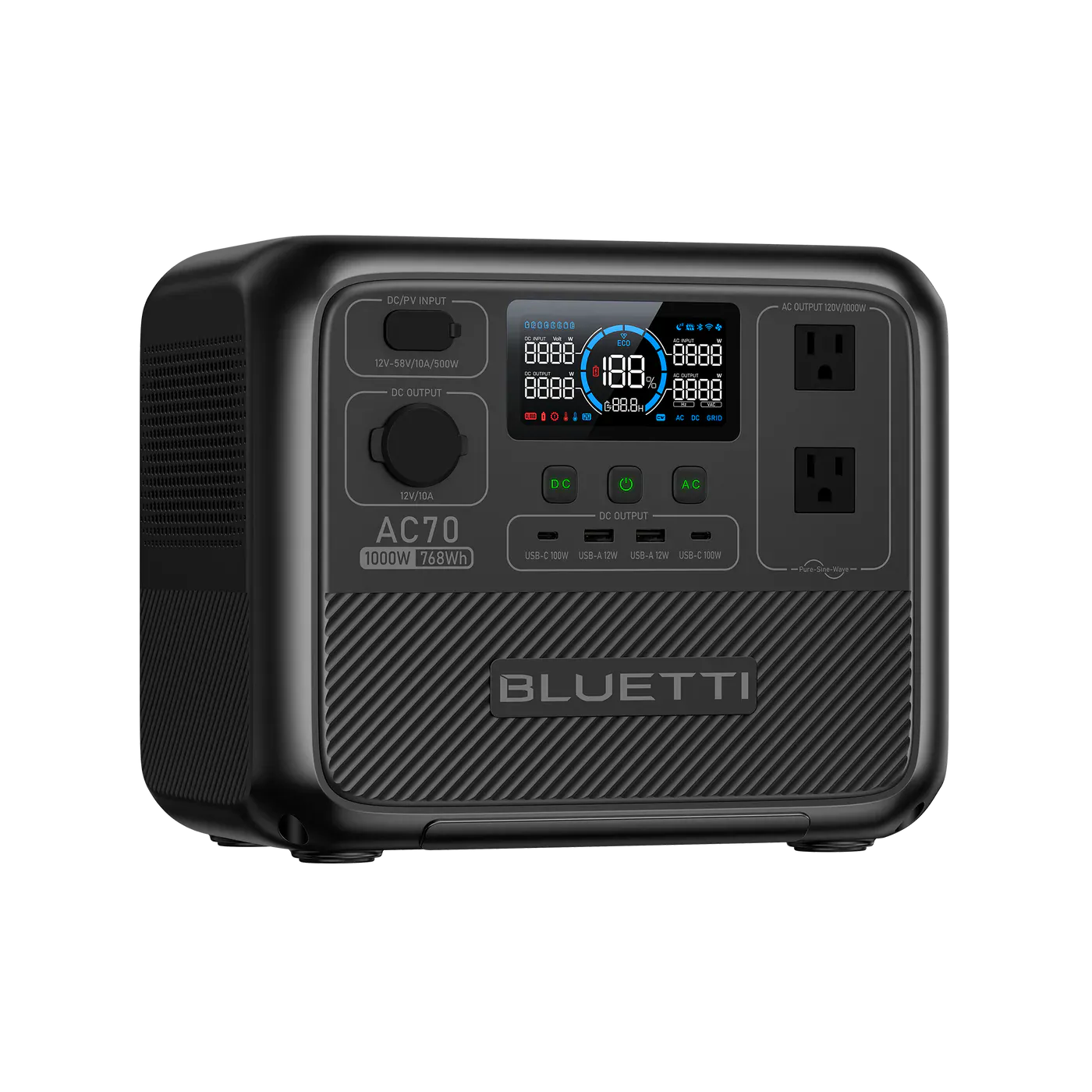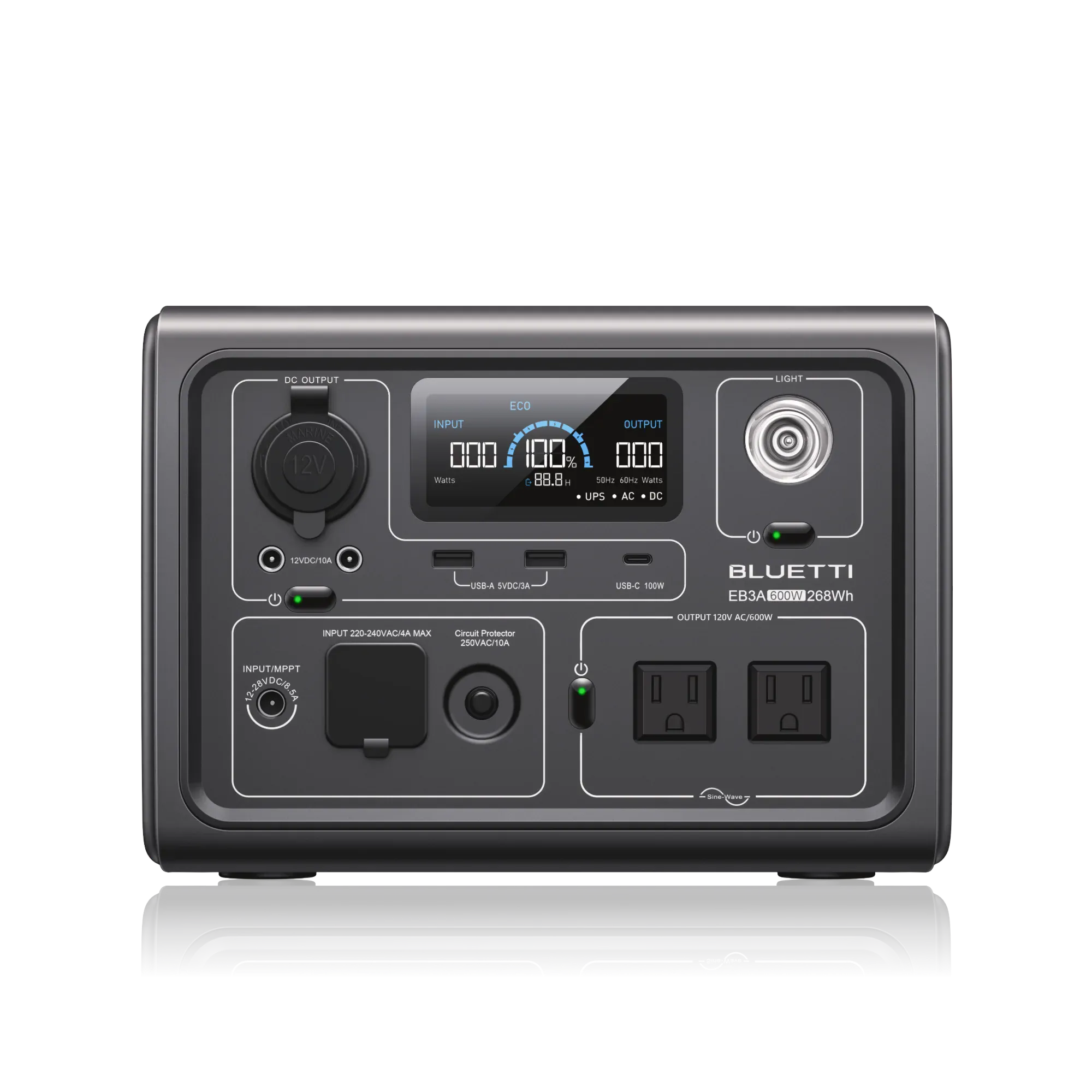
1
Voltage Gate
PASSDevice output type must match generator output.
120V required -> 120V available
This pairing clears the safety headroom. Required ~65W running and 120W surge; the RIVER 2 Pro is rated 800W / 1600W.
Same decision gates as the engine: voltage, running, surge. Runtime is shown as operational context.
Device output type must match generator output.
120V required -> 120V available
Continuous draw with safety buffer applied.
65W required -> 800W available (735W headroom)
Startup peak with safety buffer applied.
120W required -> 1,600W available (1,480W headroom)
Runtime context only. It does not change the electrical compatibility verdict.
Continuous estimate: 9.6h
Device profile reference: up to 8h per day.
Power bars show required versus available output for each gate.
View full compatibility reportQuick compatibility, required headroom, and model-specific context at a glance.
3 of 3 models are SAFE or TIGHT. Most demanding model: ResMed AirSense 10 AutoSet (104W surge).
| Model | Running | Surge | Verdict | Runtime | Source |
|---|---|---|---|---|---|
| ResMed AirSense 11 AutoSet | 56.1W | 73.2W | Safe | ~9.6h | OEM Manual |
Show expert analysisTechnical: **Running load:** 56.1 W typical. **Surge:** 73.2 W peak. **Voltage:** 120 V AC. The machine draws continuous low power with minimal startup spike. Most portable power stations with 120V inverters and 100+ W output handle this load comfortably. Field note: Verify your power station provides stable 120V AC output and at least 75W continuous rating. Disable the heated humidifier to reduce draw by ~30% and extend runtime. Always carry a backup power source for life-critical equipment. Can I run the AirSense 11 on a 500Wh power station? Yes — at 56.1W typical, a 500Wh station (350Wh usable) provides roughly 6 hours. Disabling the humidifier drops draw to ~40W and extends runtime to a full night. | |||||
| ResMed AirSense 10 AutoSet | 53W | 104W | Safe | ~10.1h | OEM Manual |
Show expert analysisTechnical: **Running load:** 53 W typical. **Surge:** 104 W peak. **Voltage:** 120 V AC required. The AirSense 10 has a higher peak draw than the newer AirSense 11 due to its older motor design. Field note: The 104W peak is the sizing constraint. Ensure your power station can handle at least 120W continuous to cover the startup surge with margin. Use a pure sine wave inverter — modified sine wave may cause motor faults in medical devices. Can I use a portable power station rated for 100W continuous? Risky — the AirSense 10 peaks at 104W. A station rated at exactly 100W may trip on startup. Look for 150W+ continuous rating to be safe. | |||||
| Fisher & Paykel SleepStyle Auto | 39W | 76W | Safe | ~13.8h | Engineering Est. |
Show expert analysisTechnical: **Running load:** 39 W typical. **Surge:** 76 W peak. **Voltage:** 120 V AC required. The SleepStyle has an integrated power supply (no external brick) and built-in heated humidifier. The 39W figure includes the humidifier at typical settings. Field note: The SleepStyle is the most power-efficient full-size CPAP here. At 39W typical, even a compact 500Wh power station covers a full night with margin. The integrated humidifier means no separate heater to add to the load. Is the Fisher & Paykel SleepStyle easier to run off-grid than ResMed? Yes — at 39W typical vs 53-56W for ResMed models, the SleepStyle draws roughly 30% less power. An 8-hour night consumes ~312 Wh vs 424-449 Wh for ResMed. | |||||
This unit ranks #8 of 33 compatible generators for this device by buffered margin (Overkill class).
33 of 33 generators are SAFE+TIGHT for CPAP Machine.
Fit class uses buffered needs (running and surge) for this device.
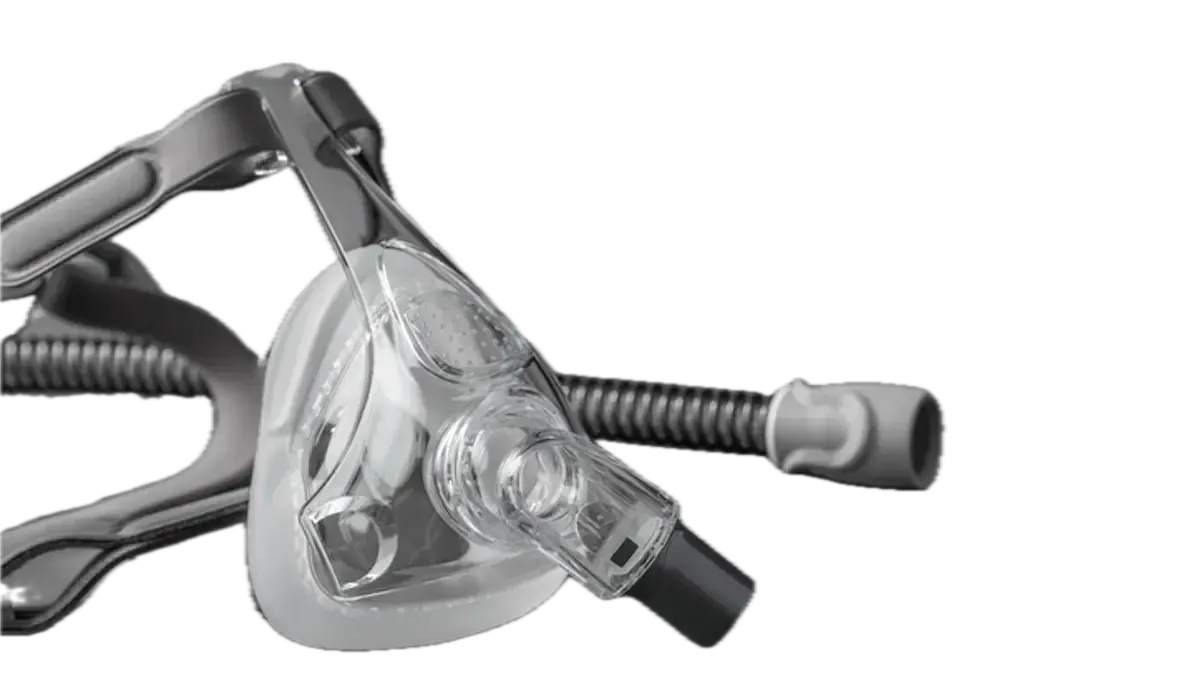
8-Hour Sleep Session
Select Your Model:
Free Tools
The 1600W surge rating can handle typical motor startup events found in residential compressor-based appliances like refrigerators and well pumps. The 800W running capacity can support continuous loads such as home network equipment, lighting circuits, and small kitchen appliances. This configuration works well for targeted backup scenarios rather than whole-home replacement power.
This unit uses LFP chemistry, which offers stable thermal characteristics during discharge cycles. The 768Wh capacity supports extended runtime for moderate household loads. Source: EcoFlow RIVER 2 Pro User Manual v1.0 (manufacturer documentation).
Keep your CPAP Machine running with solar • MPPT: 11– 50V • Max: 220W
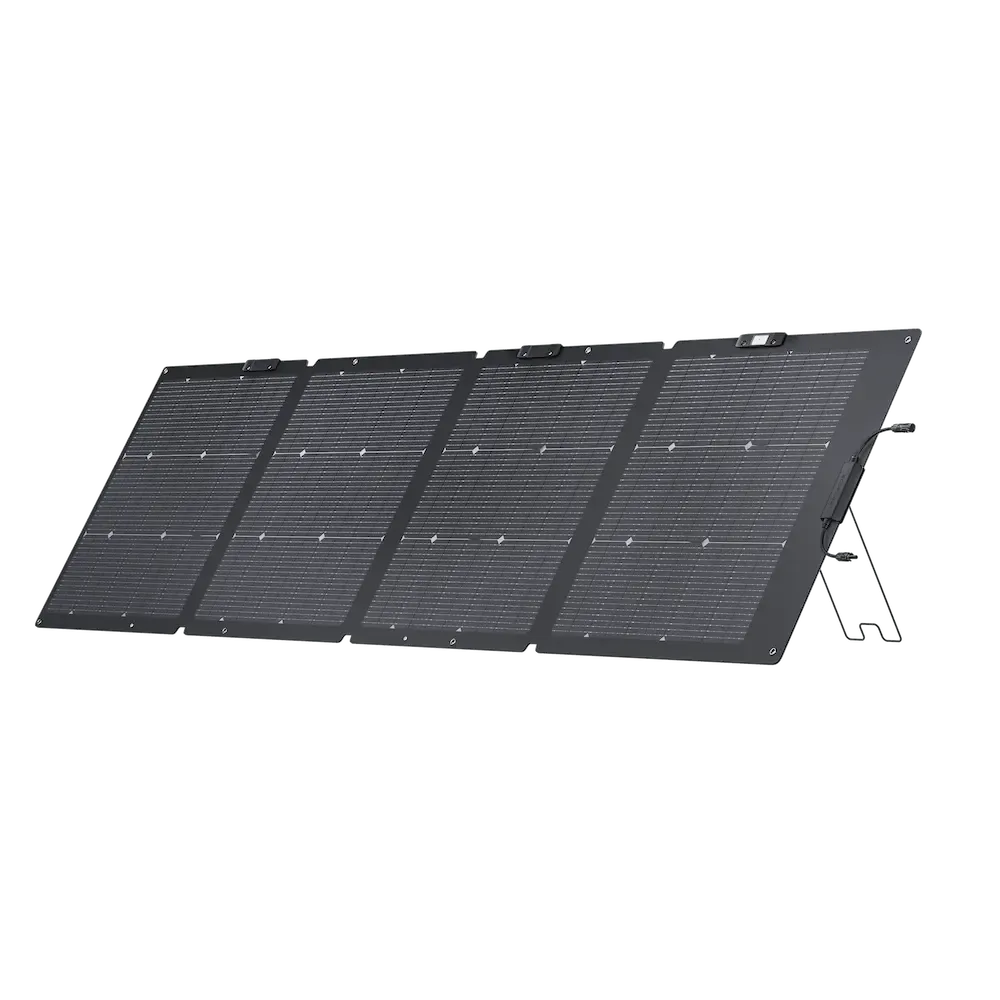 Official
 220W Panel
Adapter required: MC4 -> XT60i.
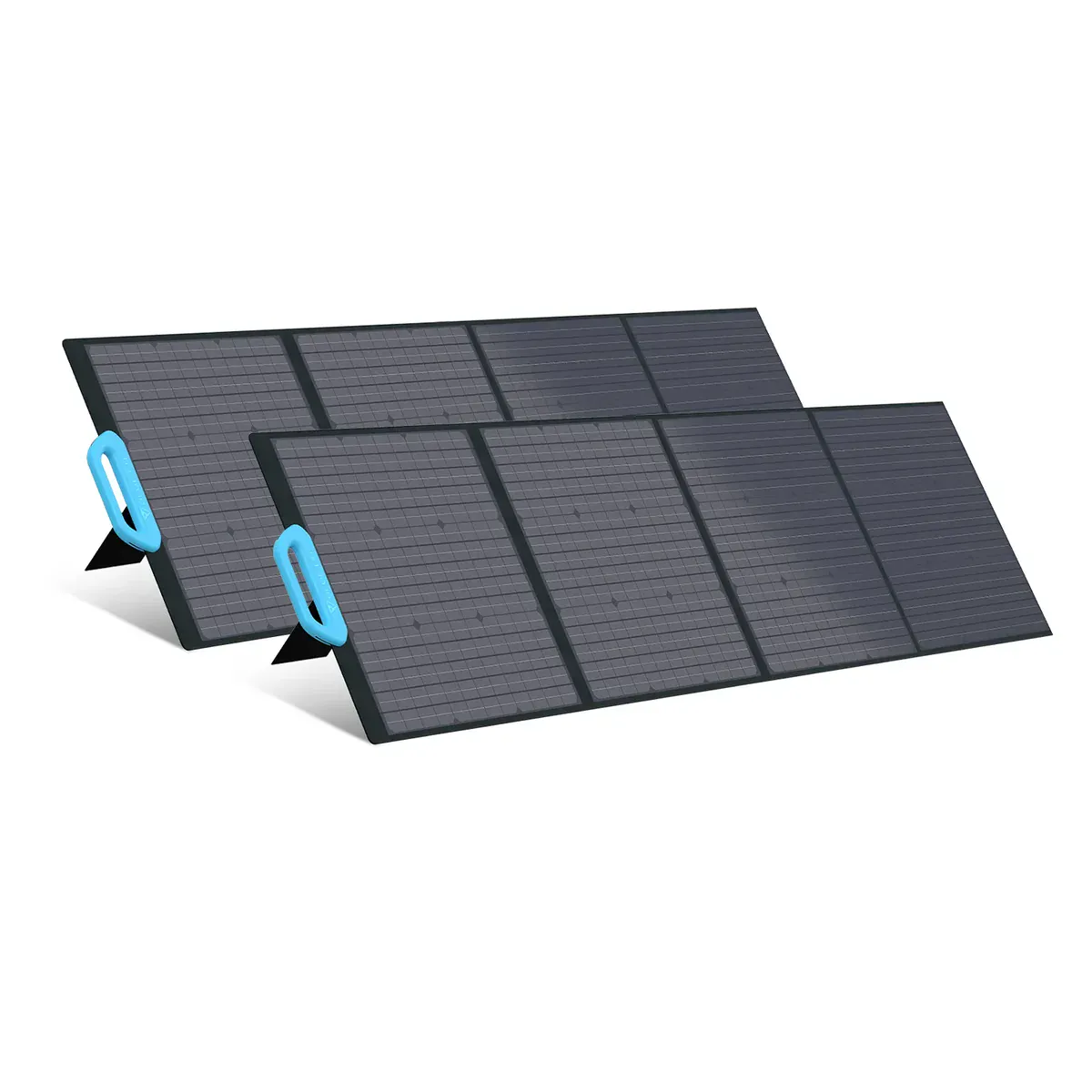 Smart Value
 200W Panel
Adapter required: MC4 -> XT60i.
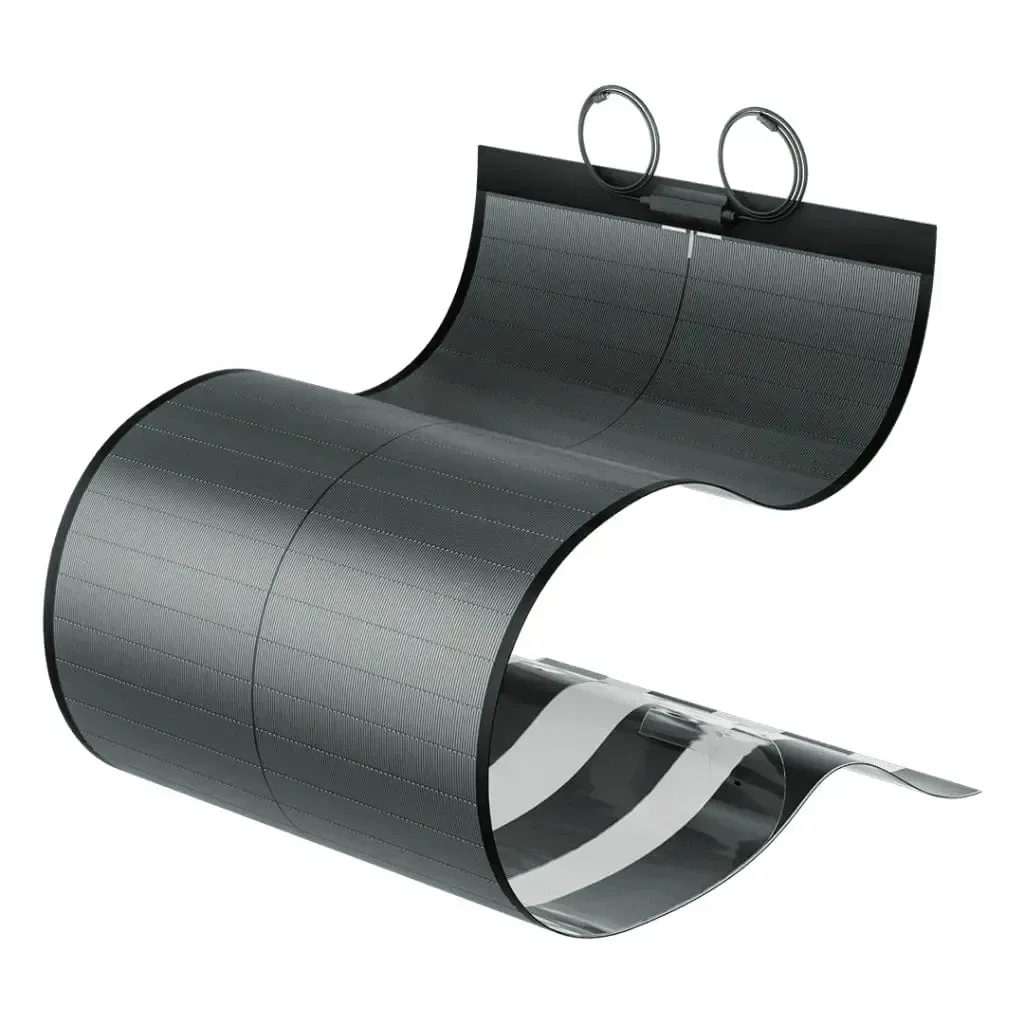 Smart Value
 200W Panel
Adapter required: MC4 -> XT60i.
Yes. The EcoFlow RIVER 2 Pro provides 800W running / 1600W surge. The CPAP Machine needs 65W / 120W (including 15% buffer). That leaves 735W of running headroom and 1480W of surge margin.
Approximately 9.6 hours, based on the CPAP Machine's 56W draw and the RIVER 2 Pro's 768Wh capacity (70% usable after real-world losses).
With 310W allocated to the CPAP Machine, the RIVER 2 Pro still has ~274W of margin. These devices could run simultaneously:
Pro Tip for Medical Users: According to energy reports, turning off the humidifier on your CPAP Machine can double your runtime. Using a DC cable instead of the AC plug is also recommended to avoid inverter inefficiency.
Compare all 33 generators for the CPAP Machine
Ranked by budget, runtime, and overall compatibility.
Derived from variant list (max of variants). Running worst case = ResMed AirSense 11 (56.1W typical). Surge worst case = ResMed AirSense 10 (104W peak).
EcoFlow RIVER 2 Pro User Manual v1.0
Similar-output alternatives you can compare side by side.