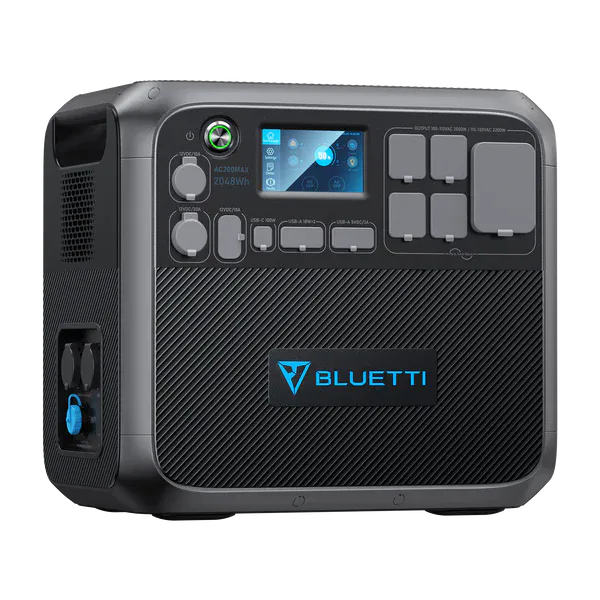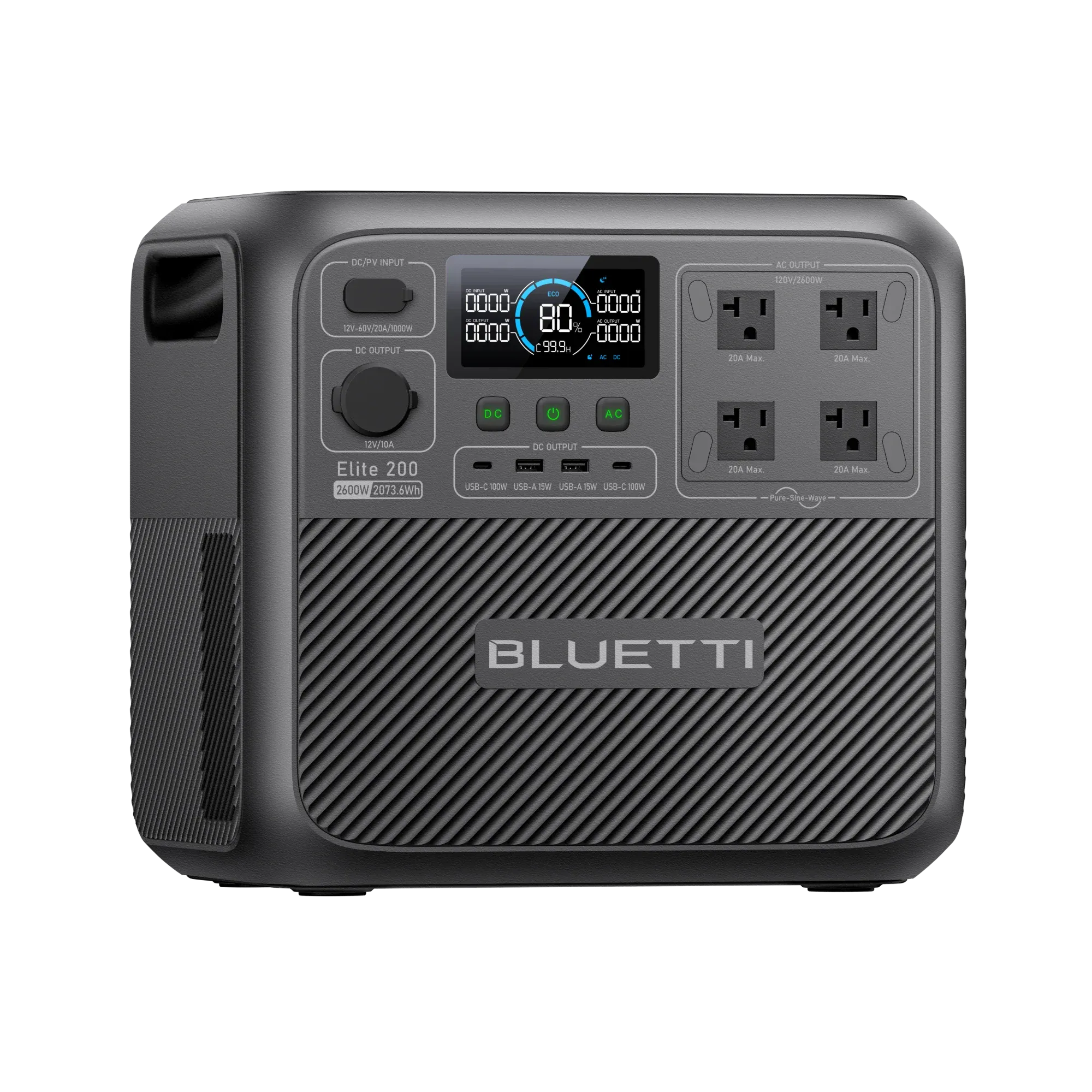
Strengths
- 100% LFP lineup (long cycle life)
- Expandable capacity on key models
- Competitive pricing for capacity
- Good surge handling on larger units
 B
B Specs, lineup depth, and real compatibility outcomes for Bluetti models tested against 53 household and RV devices.
Bluetti focuses on LFP chemistry across their entire lineup, prioritizing longevity and safety. Their AC200 series is a staple for mid-to-large power needs, and the expandable models (AC200Max, AC200L) offer flexible capacity scaling.
45 of 53 devices compatible with at least one Bluetti model
Best for
Best for
Best for
Best for
Best for
Best for
As an Amazon Associate, we earn from qualifying purchases. Our methodology
How Bluetti units perform with the most commonly searched devices.
| Device | Best Bluetti Match | Verdict | Runtime | Full Report |
|---|---|---|---|---|
| CPAP Machine Medical 56.1W | Elite 200 V2 2,073 Wh battery | Safe | 25.9h | View report |
| French Door Refrigerator Large Appliances 207W | Elite 200 V2 2,073 Wh battery | Safe | 7h | View report |
| Sump Pump (1/2 HP) Emergency 1,127W | AC200MAX 2,048 Wh battery | Safe | 1.3h | View report |
| Window AC (8,000 BTU) Heating & Cooling 710W | AC200L 2,048 Wh battery | Safe | 2h | View report |
| Microwave Oven (1000W) Kitchen Appliances 1,920W | Elite 200 V2 2,073 Wh battery | Safe | 0.8h | View report |
Showing best-case results per device. For full results across all 6 models, see individual device guides.
Bluetti is one of the longest-running dedicated brands in the portable power station category. The company started in 2009 under Shenzhen PowerOak New Energy and expanded into the US market over the following decade. In practical buyer terms, Bluetti sits between EcoFlow and Jackery: more modular and spec-heavy than Jackery, usually more price-aggressive than EcoFlow at similar capacity tiers.
The core Bluetti thesis is straightforward. Offer solid inverter output, LiFePO4 chemistry across the lineup, and expansion options on key models without forcing buyers into the highest price bracket. That positioning still makes Bluetti a strong option for users who care about capacity-per-dollar and flexible upgrade paths.
There are trade-offs. Product naming is still confusing, charging experience is less polished than EcoFlow in some tiers, and support quality can vary by region and reseller channel. This page covers what Bluetti does well, where it falls short, and how the models in our tested database actually perform.
Bluetti is frequently priced below equivalent EcoFlow configurations in US retail channels. Pricing moves constantly, but the pattern is consistent: many Bluetti models offer competitive output and capacity at a lower entry point. For buyers optimizing on usable capacity and surge headroom, this often puts Bluetti on the shortlist quickly.
In our tested database, expansion is available on AC200L and AC200MAX. That matters for buyers who do not want to overbuy on day one. You can start with a base unit and scale capacity later when budget or needs change.
All Bluetti models currently in our database use LiFePO4 chemistry. This is a practical advantage for cycle life and thermal stability, especially for users who expect regular use rather than occasional emergency-only operation.
Solar input varies by model, but the upper tier is strong in this catalog:
For users building a battery-plus-solar workflow, those numbers are viable for meaningful daytime recovery.
Bluetti has multiple overlapping series and frequent refreshes, which can make model selection harder than it should be. In real-world shopping, buyers often compare AC200L, AC200MAX, and Elite 200 V2 side by side because capacities are close and naming alone does not make hierarchy obvious.
Important distinction: none of the Bluetti models currently tested in this database are native 120V/240V split-phase units. Every tested model here is 120V.
That means central AC, electric dryers, and other hard 240V loads remain incompatible on voltage alone in our compatibility engine.
As with most direct-to-consumer power station brands, support quality depends heavily on region, timing, and where you bought the unit. Buyers who prioritize smoother returns or escalation paths are usually better served purchasing through a strong third-party retailer with clear warranty handling.
Some models use less standardized charging/accessory paths than buyers expect. Before purchase, verify charging cable type, expansion compatibility, and exact port configuration for your use case.
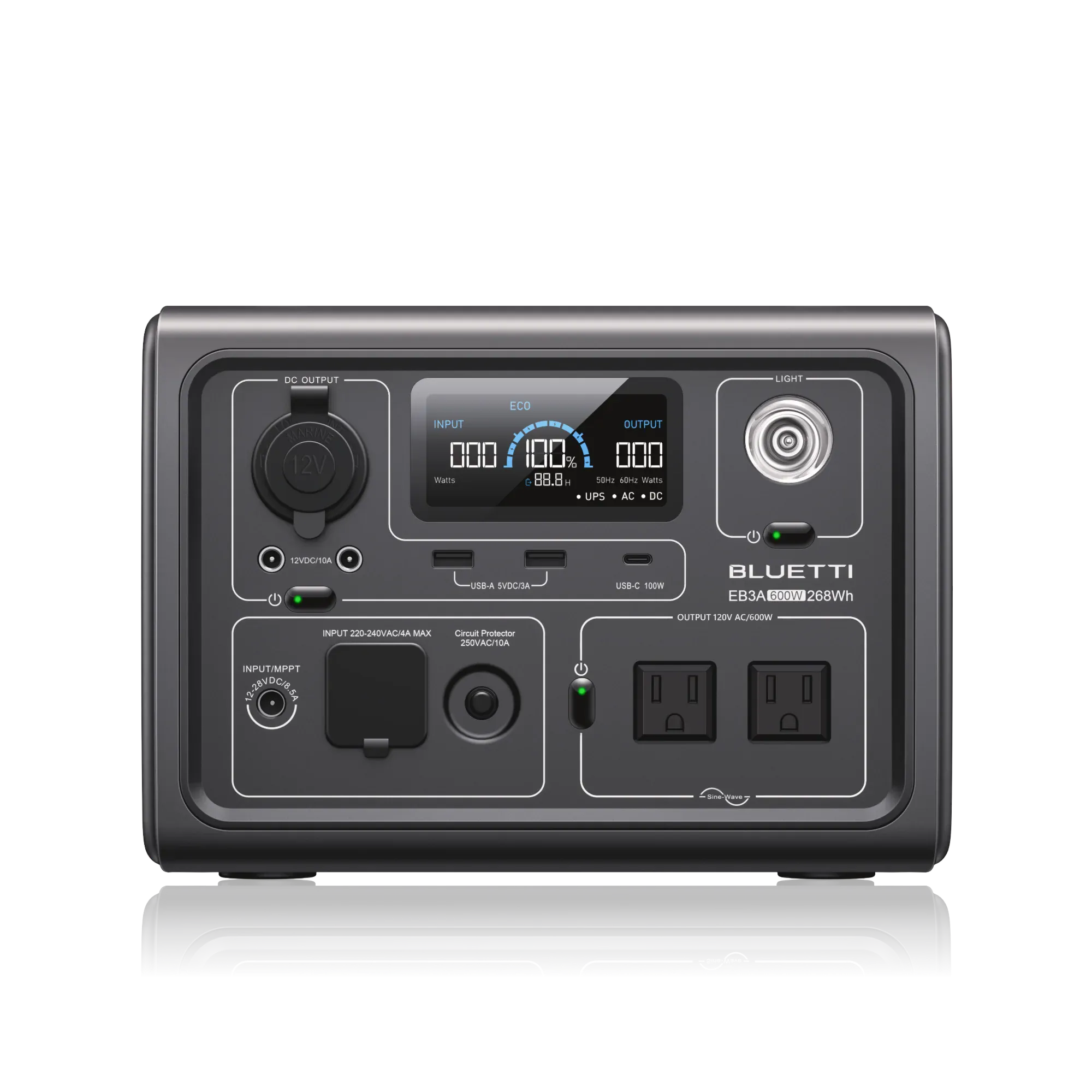
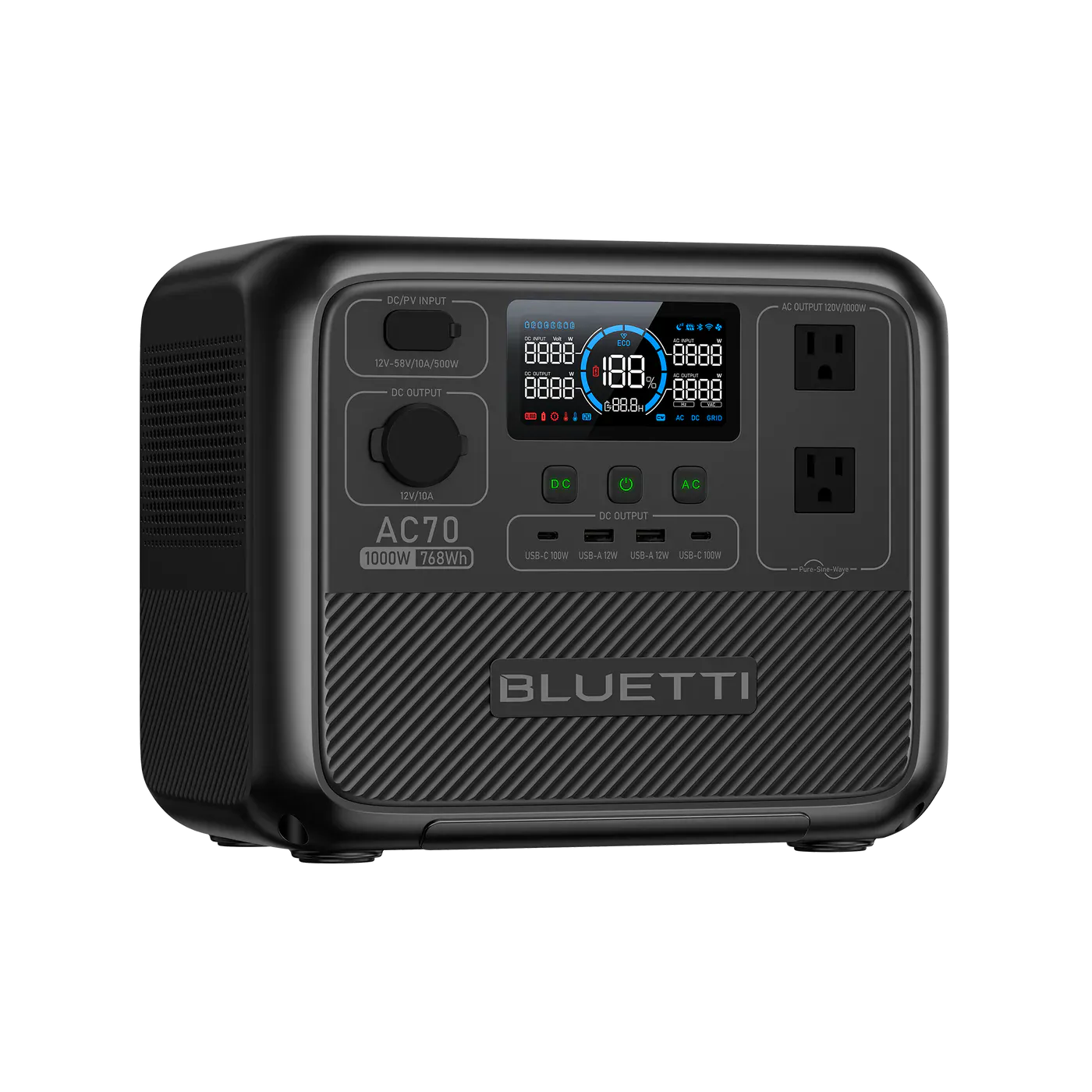
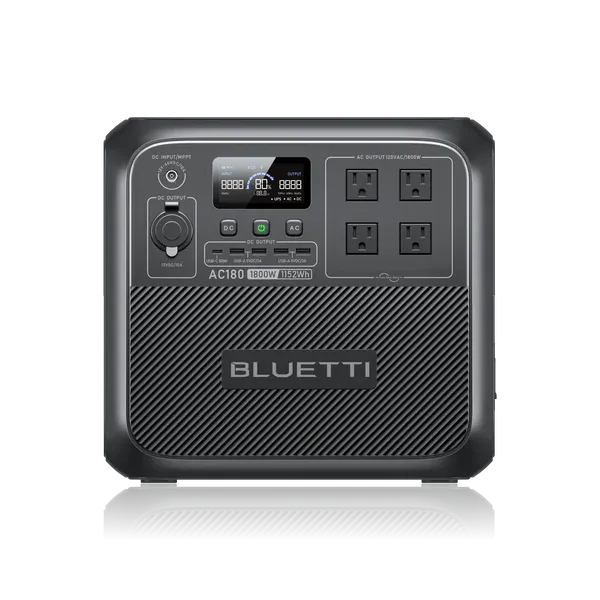
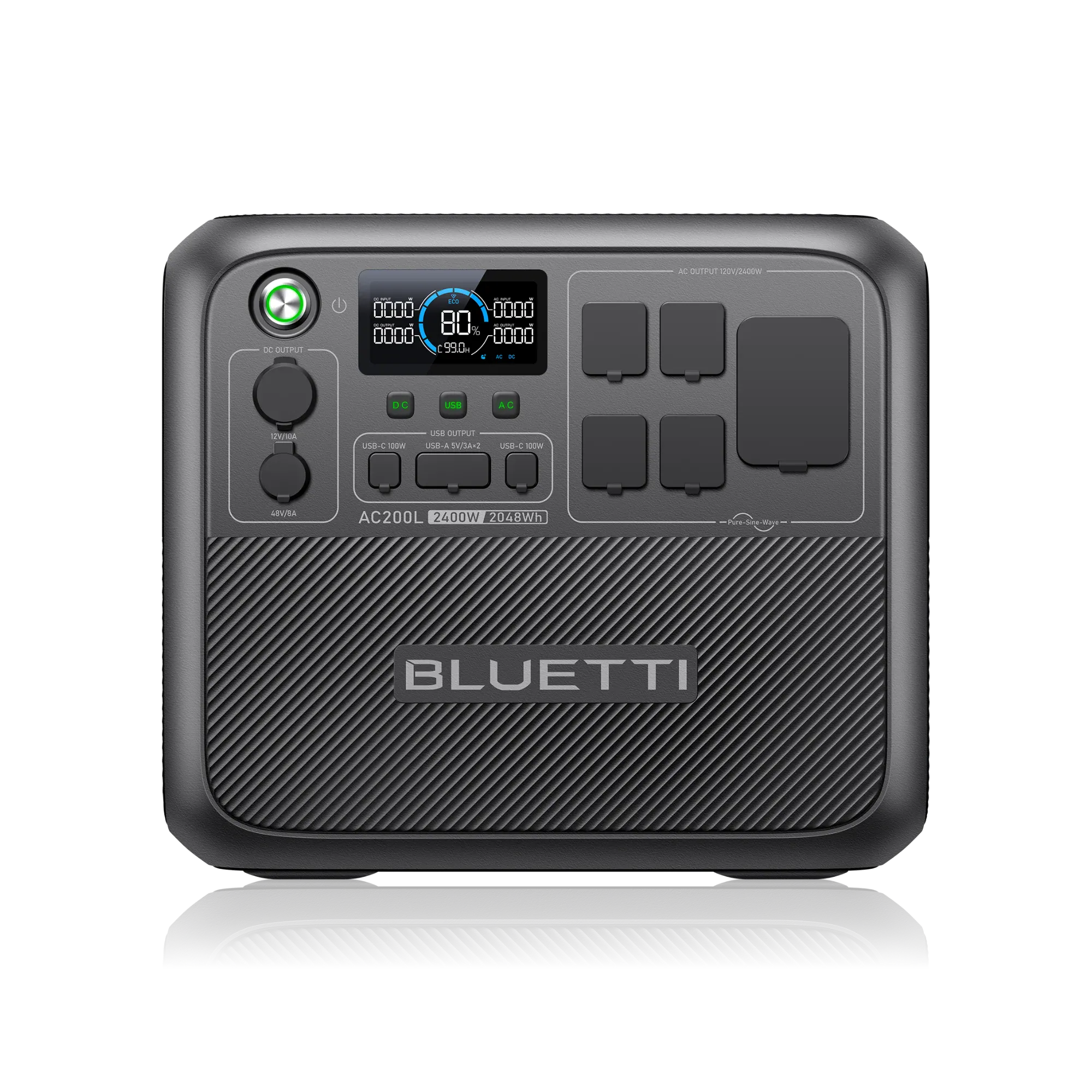
| Model | Capacity | Continuous Output | Peak Surge | Solar Input | Expandable |
|---|---|---|---|---|---|
| EB3A | 268.8 Wh | 600W | 1,200W | 200W | No |
| AC70 | 768 Wh | 1,000W | 2,000W | 500W | No |
| AC180 | 1,152 Wh | 1,800W | 2,700W | 500W | No |
| AC200L | 2,048 Wh | 2,400W | 3,600W | 1,200W | Yes |
| AC200MAX | 2,048 Wh | 2,200W | 4,800W | 900W | Yes (up to 8,192Wh) |
| Elite 200 V2 | 2,073.6 Wh | 2,600W | 3,600W | 1,000W | No |
Summary from this dataset:
Bluetti is a strong choice if:
Look elsewhere first if:
Every Bluetti model is evaluated with the same True Surge protocol used across all brands. We score compatibility using published continuous output, surge output, battery capacity, and voltage constraints. Marketing boost modes are not used as a substitute for real inverter capability in verdict logic.
If a load requires 240V, voltage gating is enforced first. If voltage passes, we evaluate running watts, surge margin, and runtime from the same engine used across all run pages and best-for pages.
For methodology details, see our Methodology page.
Sources: Manufacturer specifications from official Bluetti product pages and manuals represented in this site’s generator database (accessed February 2026). Company timeline context from public company profiles and brand documentation. Compatibility verdicts on this page are generated from GeneratorChecker’s True Surge protocol and not from marketing wattage claims.
Side-by-side comparisons between nearby Bluetti models.